
Using a coffee machine properly comes down to four habits: fresh water, a grind that suits the machine, consistent dosing, and cleaning after every session. Gravity-fed filter machines and cafetières work on a different principle from espresso machines, which force water through the grounds under pressure, so the exact routine depends on the type you own. [1]
What “properly” means for each machine type
Most coffeemakers move hot water through coffee grounds by gravity or by pressure. [1] In an automatic drip-brew machine the grounds sit in a paper or metal filter in a funnel above the pot, and hot water drips through them under gravity. [1] Espresso makers use pressure to force water through the coffee and produce espresso. [1] A cafetière works differently again: the grounds stay in direct contact with the water and a mesh filter separates them, which is why it needs a coarser grind than a drip machine — finer grounds seep through the mesh and into the drink. [1] Single-serve machines brew from a single-serve container and gained popularity in the 2000s. [1]
That is the first thing to check when a cup tastes wrong. Too fine a grind in a cafetière gives you grit and over-extracted bitterness; too coarse a grind in an espresso machine gives you a thin, fast pour. A pod machine removes that variable entirely, which is why it is the easiest place to start as a beginner.
How to use a coffee machine: the basic steps
- Rinse and fill. Start with a clean water reservoir and fresh water each time. Old water sitting in the tank overnight picks up staleness that no amount of good coffee will cover.
- Set the grind for the method. Coarse for a cafetière, finer for a filter machine, fine and consistent for espresso. [1]
- Measure the coffee. Use the same dose each time so that when you change one thing — grind, bean, brew time — you can actually tell what made the difference.
- Load and seat everything. Filter paper or metal filter in the basket, cafetière plunger resting above the grounds, portafilter locked squarely into the group head.
- Brew and leave it alone. Let a filter machine finish its cycle before lifting the pot; start an espresso shot and watch the flow rather than walking away.
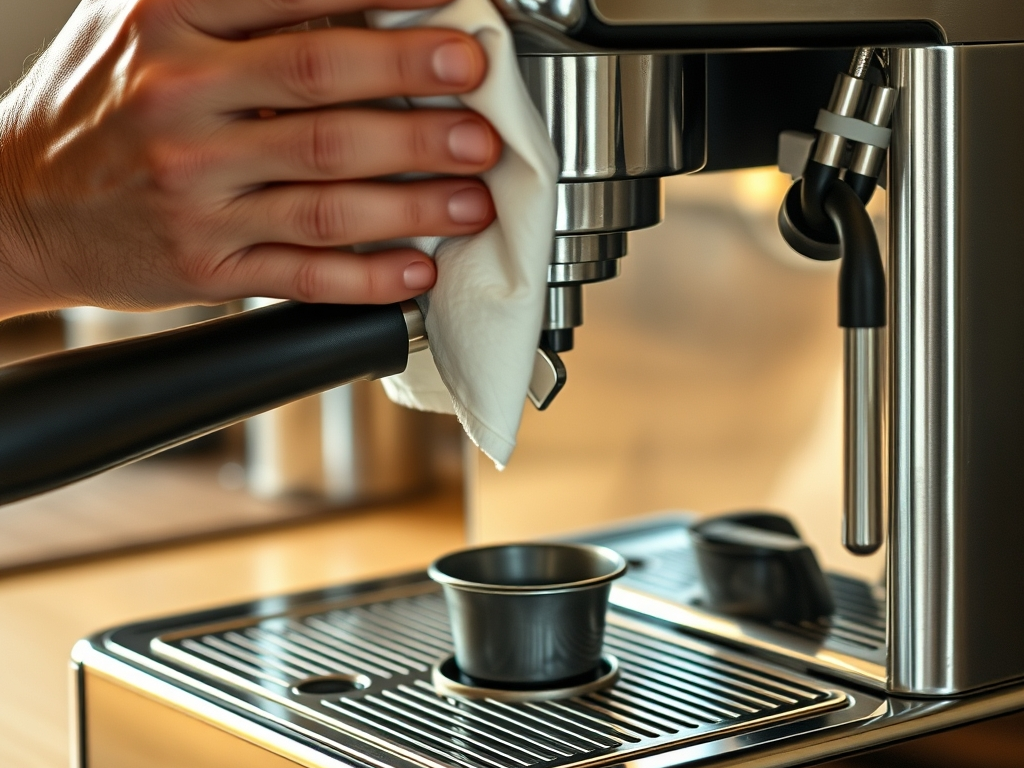
- Empty and rinse straight away. Knock out the grounds, rinse the filter basket or cafetière, and wipe the steam wand if you used one. Dried grounds and milk are the two things that make a machine unpleasant to use.
- Switch off. If your machine has a keep-warm plate or standby mode, turn it off when the pot is done — reheated coffee tastes flat and there is no reason to hold a machine hot all morning.
How to use a coffee machine with pods or capsules
Single-serve machines brew from a single-serve container, which takes the grind and dose decisions out of the process. [1] The routine is: fill the reservoir, lift the handle, seat the pod or capsule fully so the machine can pierce it correctly, close the lid, choose your cup size and press start. Let the machine finish before opening it again, then bin the used pod.
A few habits keep pod machines working well. Run a plain water cycle every so often so old coffee oils do not build up in the needle or spout, and use the descaling routine when the machine tells you to — scale is the usual cause of a machine that suddenly brews short or lukewarm. Keep capsules somewhere dry: damp pods can clog the piercing mechanism.
How to use a coffee machine’s milk frother
Whether you have a wand on a manual machine or an integrated automatic frother, the sequence is the same: froth first, then brew, so the espresso goes into a jug or cup that is already ready. Fill the jug no more than about half way, start with cold fresh milk, and keep the tip of a steam wand just below the surface until you have the foam you want, then sink it deeper to heat the milk through.
Clean the frother the moment you finish. On a wand, wipe it immediately and give it a short burst of steam. On an integrated system, run the automatic rinse cycle the machine offers. Milk residue left in a frother is the single fastest way to make every later coffee taste sour.
How to set a coffee machine for your taste
Strength is a dosing question before it is a settings question. With a cafetière, coffee can be brewed to any strength simply by adjusting the amount of ground coffee used. [1] On an espresso machine, changing the grind finer or coarser shifts how fast the water passes through, which changes the flavour far more than any button does.
The setting most people forget is time in the cup. Because the grounds stay in contact with the water in a cafetière, coffee left standing keeps changing; some reports say a 0.5-litre press is spoiled after about 20 minutes [1]. Pour the whole jug within that window or make a smaller amount. If your machine has a cup-size memory, water hardness setting or auto-start timer, set these once during the first week so the descale warning is accurate later.
Cleaning, descaling and daily care
Daily: rinse the filter basket, empty the grounds, wipe the steam wand, and leave the water tank to dry open rather than sealed and damp. Weekly: wash removable parts in warm soapy water and run a water-only cycle. When the machine asks: descale. De’Longhi lists descalers and water filters among its essential care products for peak flavour [2].
Use filtered water if your area is hard, and never leave water sitting in the tank for days. If you want to keep running costs down, brew only what you will drink and switch the machine off at the wall afterwards rather than leaving it on standby.
| Brand | What they offer | Worth knowing |
|---|---|---|
| Rocket Espresso | Heat exchanger and dual boiler espresso machines, grinders, bundles, accessories and beans, sold through the exclusive UK distributor and online store [3] | Machines and grinders are hand-built in Italy and classed as bespoke under the UK Consumer Contracts Regulations 2013, so they cannot be cancelled, exchanged or returned; accessories bought online can be returned within 14 days if unused and in their original packaging [4] |
| De’Longhi | Automatic and manual coffee machines, coffee beans, a LatteCrema Cool upgrade set, descalers and water filters, plus a trade-in programme and a Help Me Choose tool [2] | The Rivelia Start is described as 24.5 cm wide with interchangeable bean hoppers, and the coffee beans pages carry links to FAQs and instruction manuals [2][5] |
Which option fits whom
You want the machine to do the work. De’Longhi’s automatic machines are aimed at making coffee specialities easily at home, and the Rivelia Start is built around a 24.5 cm footprint with interchangeable hoppers for switching beans. [2] That suits a small UK kitchen where the machine lives on the worktop permanently.
You want to learn the craft. Rocket Espresso’s range splits into heat exchanger and dual boiler machines, plus grinders and bundles. [3] That is a route for someone who wants to dose, tamp and adjust grind themselves — but read the return terms before ordering, because machines and grinders are treated as bespoke and cannot be returned or cancelled once the order is placed. [4] Rocket says its team is happy to guide customers through the options before ordering if they have questions, so they can feel confident in their choice [4].
Milk drinks are the priority. Look for an integrated frothing system rather than a manual wand — De’Longhi’s LatteCrema setup is built around dense, creamy foam and there is an upgrade set for it. [2]
You want model-specific instructions. De’Longhi publishes FAQ and instruction manual links alongside its coffee products [5], and Rocket runs a help centre for buying advice and support for UK owners. [3] Start there rather than guessing at button sequences.
You are not buying either. A cafetière or a filter machine makes good coffee with a coarse or medium grind and a bit of attention to dose. [1] If you drink one or two cups a day, the simplest machine you will actually clean every day is usually the one that serves you best.
Whichever machine you end up with, confirm current model details, care instructions and returns terms on the brand’s own site before you order.
Sources
- Coffeemaker (Wikipedia) — Wikipedia
- De'Longhi official site — delonghi.com
- Rocket Espresso official site — rocket-espresso.co.uk
- Rocket Espresso: Refund Policy — rocket-espresso.co.uk
- De'Longhi: Coffee beans — delonghi.com
How we put this together: we compared these options using each brand's published product and policy pages and the references listed above. We haven't tested the products ourselves, and details such as prices and policies can change, so check the brand's site before you buy.
You may also find Best air fryer: how to choose one for your UK kitchen useful.