
How to choose a blender: start with the textures and jobs you actually want — smoothies, hot soup, ice, nut butter, purées — then pick the jar type, power and controls that match them. A small personal model can be enough for single smoothies, while a jug blender earns its worktop space if you cook for a family or blend hot ingredients. Check cleaning, worktop footprint, warranty and returns before you decide, because those details shape how much you use the machine.
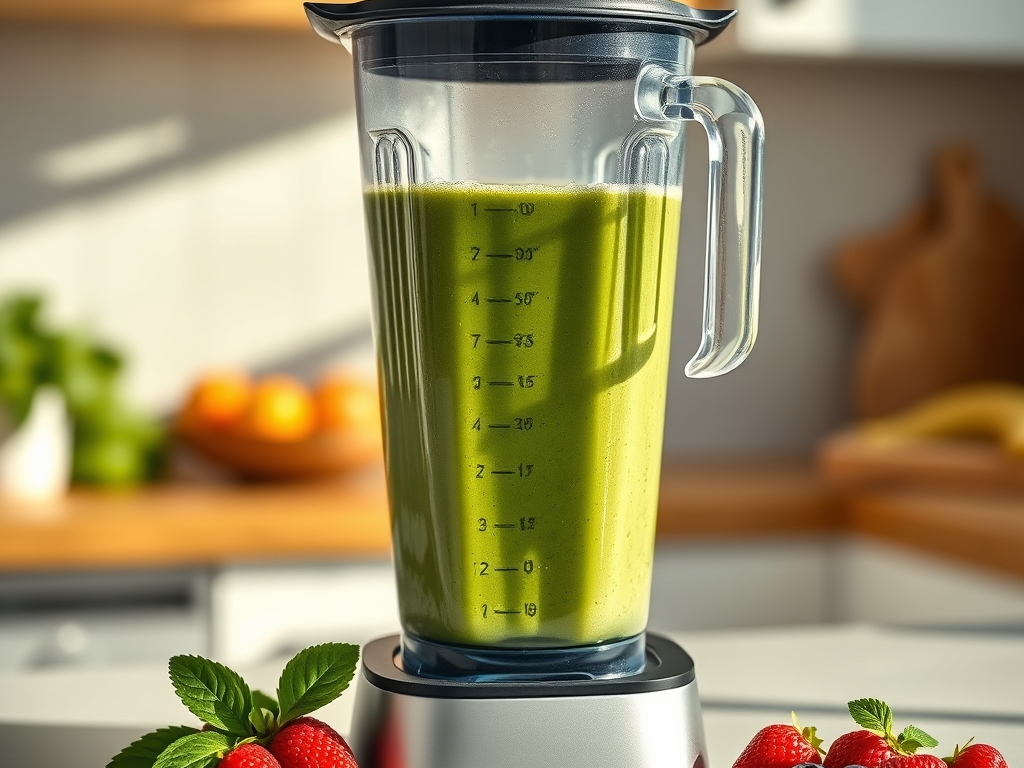
Start with the job, not the badge
A blender is a kitchen appliance for chopping, mixing or liquefying food [1] — a broad description that covers everything from a small personal cup to a full jug machine, which is why the label alone tells you very little.
So list the things you make most often. A machine bought for thick frozen-fruit smoothies is not the same as one bought mainly for soup, and a blender that handles both well needs the right jug, blade design and controls rather than a long list of decorative functions.
It helps to think beyond drinks. KitchenAid says a blender can also chop onions, carrots and herbs, turn oats and almonds into flour, mix pancake or waffle batter and make almond, oat or cashew milk [2]. If those jobs are part of your routine, look for a model whose maker describes it as suitable for chopping, grinding and mixing, not just liquidising.
For everyday cooking, the useful questions are simple: will it crush ice and frozen fruit without you stopping to shake the jug, can it handle hot soup safely, and is the jug a sensible size for the number of people you cook for? If you regularly blend small portions, a large jug can be awkward; if you batch-cook soup, a personal cup will be too small.
How much power do you need?
Shopping by wattage alone is a poor shortcut. Wattage is a motor rating, not a promise that a particular jug and blade will handle frozen berries, nuts or fibrous vegetables well, so check what the manufacturer says the model is designed to blend.
Where a number does get quoted, it usually comes as a rule of thumb rather than a specification. A contributor on the Parkinson’s UK forum suggests looking for at least 600 watts to blend a range of foods smoothly [3]. That is one poster’s advice in a general discussion, not a manufacturer’s rating, so treat it as a rough starting point and weigh it against what the maker of a specific model says it can do.
KitchenAid says extra power suits regular ice cubes, nuts or a lot of kale [2]. That is the practical version of the wattage question: if your ingredients are hard, frozen or fibrous, choose a model the maker describes as powerful enough for them, rather than assuming a higher number on the box guarantees a smoother result.
Hot ingredients need their own check. Look for a stated maximum hot-liquid volume and a lid that vents steam. The KitchenAid Pure Power blender has a vented lid and a stated limit of 1.1L for hot liquid [2]. If soup is a main reason for buying, this detail matters more than an extra speed setting.
Controls are the other half of the power question. Presets help if you want a smoothie at the push of a button, while manual speeds let you adjust texture yourself, as KitchenAid explains in its buying guide [2]. A mix of both suits households where one person wants one-touch blending and another wants to pulse dips and sauces.
Which type fits your worktop and routine?
Personal blenders are built around single serves, and a travel lid can make grab-and-go easier [2]. Nutribullet splits its range into personal, portable and family blenders, with food processors and juicers alongside [4]. That structure is useful if you are shopping for one person or for a household where different people make different-sized portions.
Jug blenders suit households that want one machine for soup, smoothies, dips and batters. KitchenAid describes its Pure Power model as an all-rounder for everyday cooking, and says a small or portable model earns its keep when worktop space is tight [2]. If your worktop is already crowded, measure the space before choosing a tall jug model, and think about whether the machine will live out or be stored between uses.
Hand blenders are the other space-saving option. Braun lists hand blenders across its MultiQuick 5, 7 and 9 series [5]. A hand blender is useful for soups and sauces in the pan or jug you already own, but it is a different tool from a jug blender: check that the attachments included suit the jobs you have in mind.
What makes a blender easier to live with?
Cleaning is the feature you use most. A self-clean programme can take some of the effort out of rinsing the jug after soups and sauces; KitchenAid’s Pure Power includes one [2]. Check how easily the jug, lid and blade assembly come apart, and whether the manufacturer gives clear cleaning instructions for the parts.
Worktop footprint and height matter as much as capacity. A blender that is too tall to sit under a wall unit, or too heavy to move, tends to stay in the cupboard. If you are short of space, a personal or hand blender may be more practical than a full jug model, which is the point KitchenAid makes about small and portable models [2].
Warranty and returns are worth checking before you buy. KitchenAid arranges refunds or exchanges through its return portal within 14 days [6]. Nutribullet says any blender purchased after 1 February 2024 includes a free two-year warranty [7], and its extended warranty package adds two years after that initial cover and extends the return period to 60 days [7]. Braun lists FAQs and instruction manuals alongside its hand blender range [5].
Where the brands differ
| Brand | What they offer | Worth knowing |
|---|---|---|
| KitchenAid | Jug blenders such as the Pure Power, with 10 speeds, smoothie, ice-crush and self-clean programmes, plus a vented lid for hot ingredients up to 1.1L [2]; personal blenders for single serves [2] | Returns are arranged through its return portal within 14 days [6] |
| Nutribullet | Personal, portable and family blender ranges, plus food processors and juicers [4] | Blenders bought after 1 February 2024 include a free two-year warranty [7]; the extended warranty package adds two years after that and extends the return period to 60 days [7] |
| Braun | Hand blenders across the MultiQuick 5, 7 and 9 series [5] | Braun lists FAQs and instruction manuals alongside the hand blender range [5] |
Which option fits whom
If hot soup and family cooking are the main jobs, a jug blender with a vented lid and a stated hot-liquid limit is the safer starting point. KitchenAid’s Pure Power is described as an all-rounder for hot and cold blending, with programmes for smoothies, ice crushing and self-cleaning [2]. Check the 1.1L hot-liquid limit against the amount you usually make [2].
If you mainly make single-serve smoothies or want a choice of personal and portable formats, Nutribullet’s range is organised around those categories, with family jugs as well [4]. Its two-year warranty on blenders bought after 1 February 2024 is a useful detail to compare [7], and the extended package adds two years and a 60-day return period [7].
If worktop space is tight or you prefer a tool that stores in a drawer, Braun’s hand blenders across the MultiQuick 5, 7 and 9 series are the relevant comparison [5]. Think about whether you want to blend in the pan or in a separate jug, and check which attachments come with each model.
If you are still unsure, go back to the three questions that decide most purchases: what will you blend most often, how many portions do you make, and how much worktop space can you give it? A good blender is one whose stated jobs match yours, with cleaning and support you will actually use. Confirm current model details, included accessories, warranty terms and return windows on each brand’s site before ordering.
Sources
- Blender (Wikipedia) — Wikipedia
- KitchenAid official site: Title: How to choose a KitchenAid blender | KitchenAid UK — kitchenaid.co.uk
- Title: Blending food — forum.parkinsons.org.uk
- Nutribullet official site: Title: All Blenders – nutribullet & magic bullet — nutribullet.co.uk
- Braun official site: Title: Hand blenders | Braun Household US — braunhousehold.com
- KitchenAid: Returns & refunds — kitchenaid.co.uk
- Nutribullet: Extended Warranty — nutribullet.co.uk
How we put this together: we compared these options using each brand's published product and policy pages and the references listed above. We haven't tested the products ourselves, and details such as prices and policies can change, so check the brand's site before you buy.