
Put simply, Breville vs De’Longhi comes down to range and naming. Machines listed under the Breville name are a fairly compact espresso lineup — Autoluxe, Prima Latte, Pixl and Barista Max [1] — while De’Longhi covers manual espresso, fully automatic bean-to-cup machines and Nespresso capsule machines it builds for Nespresso [2][3]. Confusingly, the Australian Breville Group lists its own espresso designs in Europe under the Sage name [4].
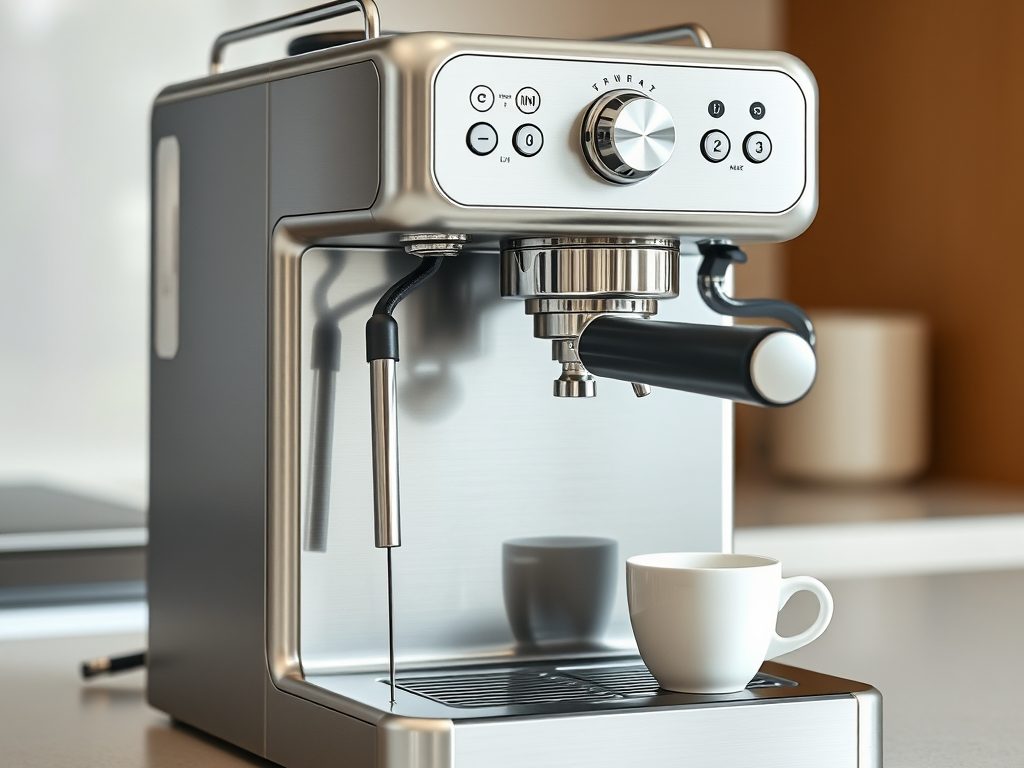
What actually separates Breville from De’Longhi
Breville’s espresso pages list 16 items, sorted into the Autoluxe full-auto range, the Prima Latte series, the Pixl and the Barista Max, with filters for auto milk, a café-style 58mm group head, coffee grinders and coffee accessories [1]. That is a focused, espresso-only lineup: milk-automated bean-to-cup at the top, simpler manual-style machines further down.
De’Longhi’s UK site splits its coffee offering into automatic coffee machines and manual coffee machines, alongside accessories, descalers and water filters, plus its own coffee beans sold in 250g and 1kg bags [3][5]. It also runs a “Help Me Choose” tool and a trade-in programme where you return an old De’Longhi machine when you buy a new one [3]. De’Longhi says it sells in the UK, with delivery stated as one to three working days and returns accepted within 30 days [3].
So the practical difference is breadth. De’Longhi has a bean-to-cup machine, a manual machine and a capsule machine for most budgets and counter layouts; Breville’s UK-facing range is smaller and leans towards espresso with automatic milk.
Breville vs Sage: they are the same company
This is the single most useful thing to know before comparing the two. Breville Group Limited is an Australian appliance maker whose brands include Breville, Sage, Kambrook, Baratza and Lelit, and it markets products under the Breville name worldwide except in Europe, where the Sage brand is used [4]. The group also owns the Sage brand outright [4].
There is a wrinkle in the UK specifically: the Breville brand there is owned by the unrelated Newell Brands company, which is why the group markets most of its products in the UK and Europe as Sage [4]. So the two names trace back to one company’s designs under two badges, while the Breville name in Britain belongs to a different business. Check which company a listing comes from, and check availability in your region, before you assume a machine is the Australian-designed one.
Sage’s site describes its machines as built around a “4 Keys Formula” for specialty coffee, with models ranging from the Oracle Dual Boiler — which switches between a fully automatic mode and manual brewing with auto grind, tamp and dial-in — to manual machines with a steam wand and integrated milk frother [6]. Sage also lists grinders, descaling solutions, cleaning tablets and water filters, and offers free virtual masterclasses and expert chat with live virtual demos [6]. Check availability for your address on the site.
Where Nespresso fits, and why De’Longhi’s name is on Nespresso machines
Nespresso is a capsule system, not a grinder-based machine. Its Original line prepares Ristretto, Espresso or Lungo by one-touch brewing, using 19-bar pressure extraction and over 30 pods sealed in aluminium [7]. Current Original models named by Nespresso include the Pixie, CitiZ, Creatista and Lattissima, and milk handling varies: some have an integrated milk frother or milk system, some have a steam wand, and on others you add a separate frother [7]. Water tanks run from 0.6 litres to 2 litres depending on the model, and Nespresso quotes heat-up times from 30 seconds down to 3 seconds across the range [7].
De’Longhi’s part in this is manufacturing. Its coffee machine pages list Nespresso machines built by De’Longhi — including the Evoluo, CitiZ & Milk, Vertuo Next and Vertuo Pop+ — next to its own Magnifica and La Specialista espresso machines [2]. If you are weighing up Breville vs De’Longhi Nespresso, the capsule machine itself is a Nespresso design made by De’Longhi; the coffee, pods and machine ecosystem come from Nespresso [7].
Worktop space, cleaning and running costs
Space matters in a UK kitchen, and the specs split two ways. Nespresso publishes dimensions for every Original model and its tanks run as small as 0.6 litres, so the compact end is genuinely compact [7]. De’Longhi makes a point of footprint with its Rivelia, described as a coffee shop in just 24.5 cm [3]. Sage and Breville machines with integrated grinders and auto milk take more room and need clearance for the group head and steam wand [1][6].
On cleaning, De’Longhi lists descalers and water filters [3], and Sage lists descaling solutions, tablets and filters [6]. Plan on descaling on the schedule in your machine’s manual, and use filtered water if your area is hard.
On running costs, the structural difference is what you buy each week. Pod machines tie you to capsules from one brand, while bean-to-cup and manual machines let you buy beans — De’Longhi sells its own beans in 250g and 1kg bags and Nespresso runs a coffee subscription [3][5][7]. Automatic milk systems add cleaning routines but remove the manual steaming step; manual steam wands take practice instead.
The four options side by side
| Brand | What they offer | Worth knowing |
|---|---|---|
| Breville | 16 espresso machines across the Autoluxe full-auto, Prima Latte, Pixl and Barista Max lines, with auto milk, a café-style 58mm group head and grinder options [1] | The Breville name in the UK belongs to the unrelated Newell Brands, not the Australian Breville Group [4]; check whether the model you want ships to your region |
| De’Longhi | Automatic bean-to-cup (Rivelia, Magnifica, La Specialista) and manual espresso machines, plus Nespresso machines it builds for Nespresso [2][3] | Available in the UK with stated delivery of one to three working days and 30-day returns; a trade-in programme exists for old machines [3] |
| Sage | Bean-to-cup and manual espresso machines with steam wand and integrated milk frother, plus grinders, descaling and cleaning supplies [6] | The European name for Breville Group designs [4]; lists free virtual masterclasses, expert chat and live virtual demos [6] — check availability in your region |
| Nespresso | Original capsule machines (Pixie, CitiZ, Creatista, Lattissima) with 19-bar extraction, over 30 pods and tanks from 0.6L to 2L [7] | Milk frother is separate on some models and integrated on others; quoted heat-up times run from 30 seconds to 3 seconds [7] — check availability in your region |
Which option fits whom
If you want one machine that grinds, brews and textures milk with minimal input, De’Longhi’s automatic range is the widest single place to look, and its UK site lets you filter between automatic and manual before you commit [3]. If you want a stronger specialty-coffee angle — manual control, single dosing, barista courses — Sage is the badge to read, since it is the Breville Group’s European brand [4][6]; confirm availability for your address before ordering.
If you want espresso with automatic milk at a simpler level and a smaller choice set, Breville’s Prima Latte and Barista Max lines are the ones to look through, but confirm which Breville business the listing comes from and whether it ships to you [4][1]. If you mainly drink milk drinks and want no grinding, no tamping and no cleaning of a group head, a Nespresso Original machine with an integrated milk device is the lowest-effort route, and you accept buying pods from one brand [7].
Two more practical matches. Small worktop: look at tank size and published dimensions first — Nespresso lists both per model, and De’Longhi describes its Rivelia Start as “Your coffee shop in just 24.5 cm” [7][3]. Easy maintenance: pick a brand whose descaler and filters you can buy from the same site, which is true of De’Longhi and Sage [3][6].
On Ninja, which this comparison is often asked about: SharkNinja Europe is listed as a member of AMDEA [8], but its coffee machines are outside the scope of the brands compared here — check Ninja’s own UK site for its current coffee range and specs.
Whichever you shortlist, confirm the current model specs, milk system, descaling routine and delivery details on the brand’s own site before ordering.
Sources
- Breville official site — breville.co.uk
- De'Longhi official site: Title: Coffee machines & Coffee Makers — delonghi.com
- De'Longhi official site — delonghi.com
- Breville Group (Wikipedia) — Wikipedia
- De'Longhi: Coffee beans — delonghi.com
- Sage official site — sageappliances.com
- Nespresso official site — nespresso.com
- Title: Members – AMDEA — amdea.org.uk
How we put this together: we compared these options using each brand's published product and policy pages and the references listed above. We haven't tested the products ourselves, and details such as prices and policies can change, so check the brand's site before you buy.