
Is a bean to cup coffee machine worth it? Usually yes, if your household drinks coffee most days and you want fresh-ground coffee without grinding and brewing separately: the machine holds whole beans, grinds them, and brews the cup in one go. [1] The case is weaker if you rarely drink coffee, or if you know you won’t keep up with the cleaning that milk and wet grounds bring. [1]
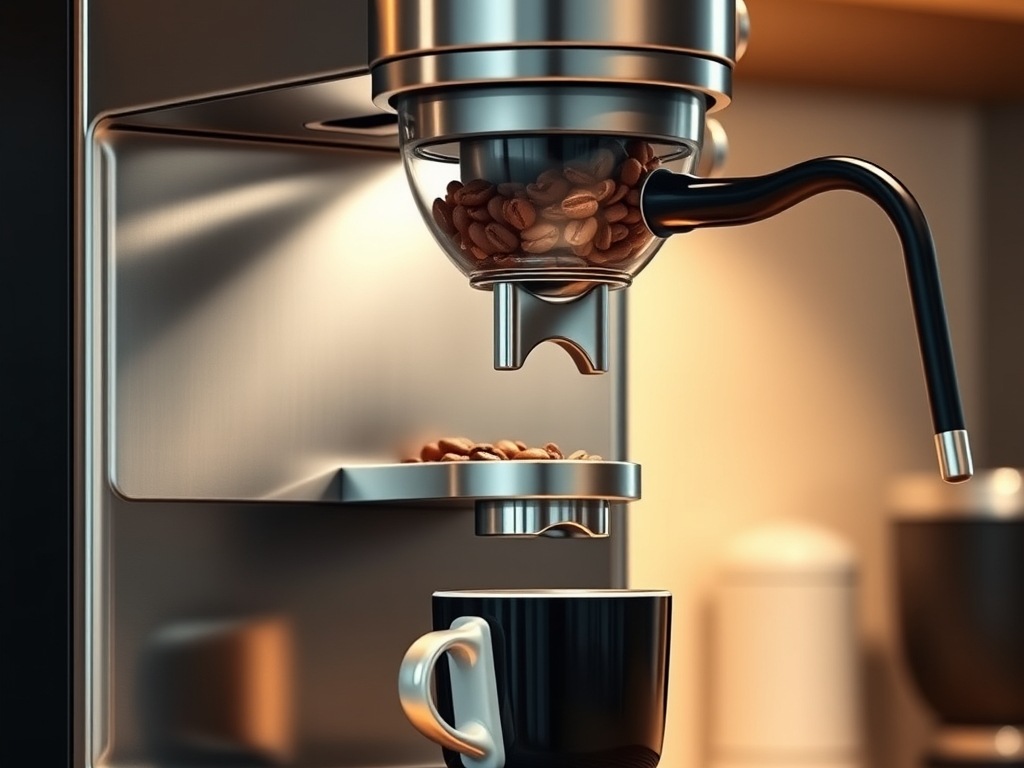
What a bean to cup machine actually does
A bean to cup machine keeps whole coffee beans in a hopper on top, grinds them on demand and brews the coffee — the same idea is sometimes called grind-and-brew. [1] On a typical domestic model, the water tank pulls forward and refills to a marked maximum, and separate controls set how much water goes through and how strong the coffee is. [1]
Because the coffee is made under pressure, the output is espresso, so a mug of black coffee or a latte is normally built from one or two espresso shots plus hot water or steamed milk. [1] Machines that force water through grounds under pressure are espresso makers, while drip machines let gravity do the work through a filter — the two families brew quite differently. [2]
Siemens describes its fully automatic bean to cup machines as brewing “at the touch of a button”, with options for espresso and milky drinks. [3] That one-touch promise is the heart of the appeal: no separate grinder, no pod, no jug of pre-ground going stale.
What decides whether it pays off for you
- How often you drink coffee. A machine that runs several times a day is worked hard enough to justify the space it takes. One that runs twice a week mostly stores dust.
- Whether you drink milk drinks. A steam arm or milk spout means a jug and removable spout to wash after use, which is the chore most owners underestimate. [1]
- Whether you’re happy buying beans. Bean to cup means whole beans, all the time — a shared workshop that installed a DeLonghi Magnifica found the ongoing bean supply the awkward part to organise. [1]
- How much cleaning you’ll tolerate. Beyond the milk side, there is a grounds container to empty and a drip tray to pull out, and the machine flags both with warning lights. [1]
- Worktop space. One unit replaces grinder, kettle-style brewing and often a pod machine, but it needs a fixed footprint with clearance above for the bean hopper. [1]
Quality, price and speed of service are the three things consumers say matter most when deciding whether to buy a freshly ground coffee out, according to Nescafé research on coffee-to-go. [4] The same trio is a fair test at home: does the machine make coffee you prefer, does the whole-life cost sit comfortably, and is it quicker than your current routine?
Running costs and upkeep to plan for
The purchase is the obvious cost, but the routine is what makes or breaks ownership. Beans are a standing purchase, and how much you get through depends on the strength you dial in. [1]
Water is the other consumable — you refill the tank to its maximum mark, so a machine in daily use means daily refilling. [1] Cleaning follows every milky drink: the jug and the removable spout need washing after use, and the grounds container needs emptying when the machine tells you. [1]
Before buying, ask the brand or check the manual about descaling and any water filter, because hard water areas need a routine for both. That is a general point about appliance care rather than something specific to any one machine, and it’s worth confirming for the exact model you’re considering.
How it compares with other ways to brew
Drip machines put grounds in a paper or metal filter and let hot water drip through under gravity into a pot. [2] They’re simple and cheap to run, but you’re brewing a batch rather than a cup on demand.
A cafetière needs a coarser grind than a filter machine, because finer grounds slip through the mesh, and it keeps more of the coffee’s oils in the cup. [2] It’s the lowest-tech route and takes up little space, but it’s manual from start to finish.
Single-serve pod machines brew from a single-serve container and became popular through the 2000s. [2] They’re quick and tidy, at the cost of buying pods rather than beans.
Bean to cup sits at the convenience end: fresh-ground coffee per cup, at the price of whole beans and a cleaning routine. [1] Whether that trade is worth it depends on how much you value the grind being fresh each time against the extra upkeep.
Are bean to cup machines worth it in a small UK kitchen?
Space is the usual sticking point. A bean to cup machine holds beans, water and usually a milk arm in one body, so it needs a clear, fixed patch of worktop rather than a cupboard appliance. [1] Measure the gap you have, including height for filling the hopper, and check the model’s dimensions on the brand’s site before committing.
Noise and warm-up time are worth checking too, since these machines grind beans at the start of every brew. Neither is a reason to avoid the category, but both matter if the kitchen is open to a living room or you brew before anyone else is up.
Which option fits whom
Ninja lists an espresso machines and makers section within its beverage machines range. [5] It suits a buyer who wants espresso-based drinks and is prepared to check two things first: whether the specific model grinds beans itself, and whether it can be bought and delivered where you live, since the brand’s site is US-facing in places — its text-deals sign-up accepts US mobile numbers only. [5]
Siemens organises its bean to cup offer into the EQ300, EQ500, EQ700 and EQ900 ranges, all described as fully automatic. [3] That structure suits someone who wants to compare feature tiers within one brand rather than shop across many.
| Brand | What they offer | Worth knowing |
|---|---|---|
| Ninja | An espresso machines and makers section within its beverage machines range, on the brand’s own site. [5] | The site is US-facing in parts — its text-deals sign-up accepts US mobile numbers only — so confirm availability in your region and check the exact model’s spec before ordering. [5] |
| Siemens | Bean to cup machines across the EQ300, EQ500, EQ700 and EQ900 ranges, described as fully automatic and one-touch. [3] | The UK section lists 17 matching freestanding models in finishes including stainless steel and piano black, some marked available for order; confirm delivery to your address before buying. [3] |
If you’re weighing a particular model from another brand, the checklist is the same: does it have a built-in grinder, how is milk handled and cleaned, what does the manual say about descaling, and what does the warranty cover?
Matching the machine to your habits
- You drink espresso or americano daily and skip milk: the simplest machine will do, and you avoid the milk-cleaning routine entirely. [1]
- You drink lattes and cappuccinos: prioritise a machine whose milk spout or jug is easy to remove and wash, since that happens after every use. [1]
- You want one-touch everything: look for fully automatic models described as brewing at the touch of a button. [3]
- You’re tight on worktop: measure first and treat the machine as a fixed appliance rather than something you’ll move. [1]
- You’re unsure you’ll keep up with beans and cleaning: a cafetière or drip machine keeps the routine smaller. [2]
Check current model specifications, delivery and warranty terms on each brand’s own site before you commit. [5][3]
Sources
- Title: DeLonghi Coffee Machine – Maker Space Wiki — wiki.makerspace.org.uk
- Coffeemaker (Wikipedia) — Wikipedia
- Siemens official site — siemens-home.bsh-group.com
- Title: Supplier News: New Nescafé research reveals almost two-thirds of consumers would bu — acs.org.uk
- Ninja official site — sharkninja.com
How we put this together: we compared these options using each brand's published product and policy pages and the references listed above. We haven't tested the products ourselves, and details such as prices and policies can change, so check the brand's site before you buy.